Professional Commercial Roof Repair in Fort Pierce & The Treasure Coast

A commercial roof leak is more than a maintenance issue — it can threaten inventory, equipment, tenant relationships, and business continuity. Without proper diagnosis and repair, water damage can spread to decking, insulation, interior finishes, and structural components, increasing repair costs significantly.

Rhino Roofs provides commercial roof repair services across Fort Pierce, Port St. Lucie, Stuart, Vero Beach, West Palm Beach, and the surrounding Treasure Coast. We repair flat and low-slope membrane systems, commercial metal roofing, steep-slope shingle systems, and clay and concrete tile on commercial properties. Every repair begins with a thorough diagnostic assessment to identify the true source of the problem. Repairs are scoped and priced in writing before work begins.

Commercial Roof Repair for Every System and Property Type

Commercial roofing failures don’t follow a single pattern — and the repair approach has to match the system, the failure mode, and the operational demands of the building where the work is happening. A puncture repair on a TPO membrane over an occupied retail space is a different project than a fastener failure on an industrial metal roof or a valley flashing failure on a tile-roofed HOA building. We work across all of them.

Rhino Roofs provides commercial roof repair services for shopping centers, office parks, industrial and warehouse facilities, multi-family communities, HOA-managed properties, medical and professional buildings, and hospitality properties throughout the Treasure Coast and Palm Beach County. Our commercial repair contractors carry the general liability coverage, OSHA safety compliance, and technical certifications that property managers, facilities directors, and corporate asset managers require before a contractor sets foot on a commercial building — and we provide that documentation upfront, not after you ask for it.
Flat Roof & Low-Slope Membrane Repair

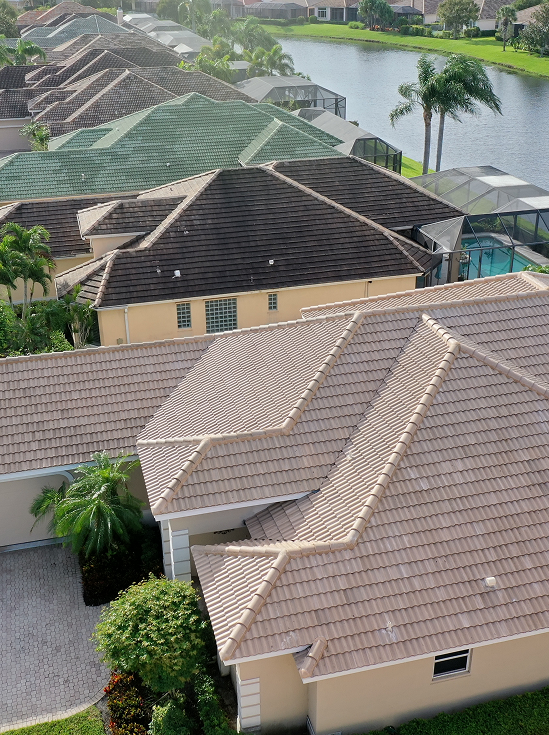
Most commercial roofs on the Treasure Coast are low-slope, and flat membrane systems require specialized diagnostic and repair techniques.

Water can travel across the deck or through insulation before appearing inside, meaning the visible leak location is often different from the actual entry point. Effective commercial flat roof repair requires tracing the source rather than repairing only the visible symptom.

TPO, PVC, and EPDM membrane repair

Single-ply membrane failures typically occur at seam zones, penetration terminations, perimeter flashings, and locations of physical damage from HVAC equipment access or windborne debris. We identify failure points through physical inspection combined with electronic leak detection and infrared thermal imaging where subsurface moisture mapping is needed. Seam repairs are executed using hot-air welding with virgin membrane material — restoring seam integrity to factory-equivalent performance rather than patching with tape or sealant products that degrade quickly. Penetration flashings are rebuilt with matching membrane material and termination bar systems rather than caulked over.

Modified bitumen and built-up roofing (BUR) repair

Multi-ply systems present different diagnostic challenges — delaminated plies, alligatored surface oxidation, failed base sheet adhesion, and saturated insulation beneath an intact-looking cap sheet are all failure conditions that don't announce themselves visually. Our modified bitumen and BUR repairs address both the surface condition and the substrate beneath it, replacing compromised ply layers and insulation board rather than layering new material over a failing assembly.

Ponding water and drainage correction

Ponding water — defined as standing water remaining on a roof surface more than 48 hours after a rain event — is not just a symptom of flat roof deterioration, it's an accelerant. It stresses membrane seams, loads the structural deck, voids manufacturer warranties, and creates the biological growth conditions that further degrade waterproofing surfaces. We address ponding as a drainage engineering problem rather than a surface repair issue: evaluating drain and scupper positions, clearing blocked drainage pathways, and where positive slope is inadequate, designing tapered insulation installations that redirect water to functional outlets.

Commercial Metal Roof Repair

Metal roofing is among the most durable commercial systems available — but coastal Florida conditions create specific failure modes that accumulate over time on any metal installation that isn’t maintained.
On exposed-fastener commercial metal systems, backed-out or corroded screws are the single most common source of commercial metal roof leaks. As rubber or neoprene washers degrade under UV exposure and thermal cycling, the watertight compression seal at each fastener point deteriorates. On large commercial metal roof surfaces, hundreds of fastener points may be approaching or past the end of their seal life simultaneously — making proactive fastener assessment a financially important maintenance activity, not just a repair trigger.
Coastal proximity accelerates corrosion on metal roofing systems not specified with marine-grade alloy fasteners and appropriate coating systems. Surface rust at laps, panel edges, and curb flashing terminations compromises both the structural integrity and the waterproofing continuity of the assembly. We treat active oxidation zones with appropriate rust inhibitors, encapsulate compromised flashing terminations, and apply elastomeric sealant systems at structural transitions — addressing the corrosion condition rather than painting over it.
Curb flashings at HVAC equipment, pipe penetrations, and roof-to-wall transitions are the locations where commercial metal roofs most commonly develop concentrated leak points. Custom fabricated flashing replacements, matched to your panel profile and installed to current Florida Building Code specifications, address these failures correctly rather than with sealant applications that provide temporary relief but don’t resolve the structural flashing deficiency.

Commercial Shingle Roof Repair

Multi-family residential communities, mixed-use developments, and commercial properties with pitched architectural rooflines frequently use asphalt shingle systems at a scale and complexity that requires commercial-level project management — multiple buildings, phased scheduling, tenant notification protocols, and insurance documentation requirements that a residential repair approach doesn’t address.

Architectural shingle systems on multi-family and commercial properties are subject to the same wind uplift failure modes as residential shingles, but the scale of damage following a storm event is amplified. Missing tabs across multiple buildings, lifted rake and eave edges, and failed ridge cap shingles on a 20-building HOA community represent a repair scope that requires systematic assessment across the full property rather than building-by-building reactive response.
Commercial shingle roof flashings at HVAC curbs, plumbing vents, skylights, and roof-to-wall transitions accumulate wear faster on occupied commercial buildings where rooftop equipment access is regular. Step flashing separations, counter flashing failures, and deteriorated pipe boot sealants are the most common leak sources on aging commercial shingle systems — and they’re addressable with targeted repairs that don’t require full section replacement when caught before the underlying decking is affected.

We provide commercial shingle roof repair across the Treasure Coast for HOA communities, multi-family properties, retail centers, and any commercial building with a pitched architectural shingle roof — with the project documentation, phased scheduling, and tenant communication protocols that commercial property management requires.

Commercial Tile Roof Repair

Clay and concrete tile roofing is common on Florida coastal commercial properties — hospitality facilities, resort-style multi-family communities, and mixed-use developments where the Mediterranean architectural character is part of the property’s value proposition. Maintaining that appearance and the structural integrity beneath it requires repair expertise specific to tile systems.

Individual cracked, slipped, or broken tiles are among tile roofing’s most manageable repair categories — when tiles are properly matched, localized replacement can be executed without disturbing the surrounding field. Valley mortar deterioration, hip and ridge cap failures, and damaged rake tile installations are the other common tile-level repair categories on commercial properties, and all are addressable with material-matched repairs that restore both waterproofing function and visual continuity.

Commercial Roof Repair Diagnostics Reference

Common Failure Locations

Seams, penetrations, perimeter flashings, ponding zones

Repair Approach

Thermal imaging leak detection; hot-air weld seam repair; penetration flashing rebuilds; drainage correction

Common Failure Locations

Surface oxidation, delaminated plies, failed base sheet adhesion

Repair Approach

Ply-level replacement; insulation board assessment; surface restoration or coating

Common Failure Locations

Backed-out fasteners, oxidized laps, curb flashing failures

Repair Approach

Fastener replacement; rust treatment and encapsulation; custom flashing fabrication

Common Failure Locations

Wind-lifted tabs, flashing failures, penetration leaks

Repair Approach

Systematic multi-building assessment; section repair with code-compliant materials; flashing rebuilds

Common Failure Locations

Cracked tile, mortar deterioration, underlayment failure

Repair Approach

Systematic multi-building assessment; section repair with code-compliant materials; flashing rebuilds

Our Commercial Roof Repair Process — Diagnosis to Documentation

Commercial repair work happens above functioning businesses, occupied residential units, and active operations. How the work is managed matters as much as how it’s executed.

Step 1

Diagnostic Inspection & Thermal Imaging. We inspect the full affected area physically and, where subsurface moisture is suspected on flat roof systems, deploy infrared thermal imaging to map wet insulation beneath the membrane without destructive investigation. Water's actual entry point is located before any repair is scoped.

Step 2

Itemized Written Estimate. You receive a line-item repair proposal formatted to the documentation standards that property managers, asset managers, and commercial insurance adjusters work with. Scope, materials, timeline, and cost are specified completely before any work is approved.

Step 3

OSHA-Compliant Safety Staging. Before any crew accesses the roof, safety perimeters, fall protection systems, and debris containment are established per OSHA commercial roofing standards. Tenants, customers, and building occupants are protected throughout the project — and property managers receive a site safety plan before work begins on occupied properties.

Step 4

Repair Execution. Work is performed using factory-approved materials and techniques to preserve manufacturer warranty coverage where applicable. Permitting is handled for any repair scope that St. Lucie County or local municipalities require a permit for — which we assess and manage without requiring property management to navigate the building department process.

Step 5

Closeout Documentation. You receive before-and-after photographic documentation of all repair work, a written record of materials installed and code compliance status, and craftsmanship warranty documentation. For properties with ongoing maintenance programs, repair records are integrated into the building's roof condition file.

Commercial Roof Repair Service Areas — Fort Pierce & The Treasure Coast

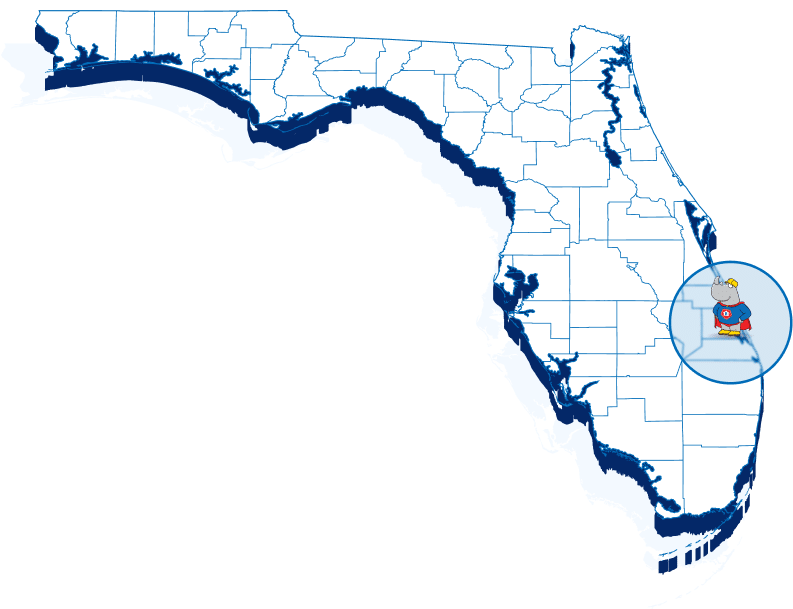
Rhino Roofs provides commercial roof repair services throughout Fort Pierce and the surrounding region, including:

Fort Pierce, FL

Our home base; commercial repair for all system types and property categories

Port St. Lucie, FL

Commercial flat, metal, shingle, and tile repair for retail, office, and multi-family

Stuart, FL

Commercial roof repair and storm damage assessment

Vero Beach, FL

Commercial roofing repair for office, medical, and hospitality properties

West Palm Beach, FL

Commercial roof repair services for Palm Beach County commercial properties

Jensen Beach, FL

Coastal commercial properties with marine-exposure repair specifications

Palm City, FL

Commercial roof repair and preventative maintenance

Hobe Sound, FL

Commercial emergency and scheduled repair services

Sebastian, FL

Full commercial roof repair across all system types

Hutchinson Island, FL

Coastal commercial and hospitality property repair

Kings Highway Corridor & St. Lucie County Industrial Parks

Commercial and industrial roofing repair for warehouse, manufacturing, and distribution facilities
For multi-building portfolios or large commercial assets requiring coordinated repair scheduling, contact us directly to discuss a program approach.

A commercial roof repair done correctly costs a fraction of what a delayed one does.

If you’re dealing with an active leak, a failed inspection, storm damage, or a repair that’s been deferred too long — Rhino Roofs is ready to assess the situation accurately and give you a written scope you can act on. No inflated findings. No manufactured urgency. Just an honest diagnostic and a direct path to the right repair.

Frequently Asked Questions From Treasure Coast Property Managers

How much do commercial roof repair services cost on the Treasure Coast?
Commercial roof repair costs depend on the membrane system type, the size of the compromised area, the diagnostic complexity, and site-specific access factors such as building height, parapet configurations, and occupied tenant spaces. A single penetration flashing repair on a low-slope TPO system is a meaningfully different scope than a multi-zone membrane failure across a 50,000-square-foot industrial roof. Because commercial repair scope is genuinely variable, we provide free on-site assessments with line-item written estimates — so you have an accurate, defensible number before approving any work.
Yes — when the substrate conditions support it. If a thermal imaging inspection confirms that the underlying insulation boards are dry and the membrane is properly bonded to the substrate, a liquid silicone coating can seal active leak points, restore UV reflectivity, and extend the roof’s service life by 10 to 15 years at a fraction of full replacement cost. The critical qualification is honest substrate assessment: coating over saturated insulation or a delaminating membrane doesn’t resolve the underlying failure, it covers it temporarily. We conduct that assessment before recommending coating as a solution, and we’ll tell you directly if the substrate isn’t in condition to support restoration rather than replacement.
Ponding water — standing water that remains on a low-slope roof surface more than 48 hours after a rain event — accelerates membrane degradation, adds structural dead load to the roof deck, and voids most membrane manufacturer warranties. On commercial buildings, it also creates the biological growth conditions that further compromise surface waterproofing over time. Repairing ponding damage without addressing the drainage deficiency that caused it produces a repair that fails again at the same location. We treat ponding as a drainage engineering problem: clearing blocked scuppers and drains, assessing whether positive slope is adequate, and where it isn’t, designing tapered insulation installations that redirect water to functional outlets.
Safety staging, debris containment, and tenant protection protocols are established before any crew accesses an occupied commercial roof. We coordinate daily work schedules with property managers and facilities teams, establish clear safety perimeters at roof access points and work zones, and manage debris removal to prevent any impact on building operations or public access areas below. For sensitive environments — occupied medical, food service, or customer-facing retail — we develop site-specific safety and operational impact plans prior to mobilization. OSHA commercial roofing compliance is a standard — not something you need to verify or request.

TESTIMONIALS

John Doe
John Doe@username
Lorem ipsum dolor sit amet, consectetur adipiscing elit. Ut elit tellus, luctus nec ullamcorper mattis, pulvinar dapibus leo.
John Doe
John Doe@username
Lorem ipsum dolor sit amet, consectetur adipiscing elit. Ut elit tellus, luctus nec ullamcorper mattis, pulvinar dapibus leo.
John Doe
John Doe@username
Lorem ipsum dolor sit amet, consectetur adipiscing elit. Ut elit tellus, luctus nec ullamcorper mattis, pulvinar dapibus leo.