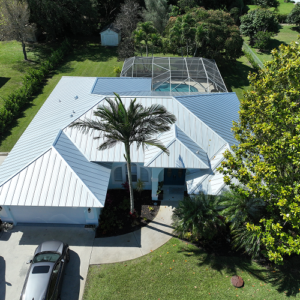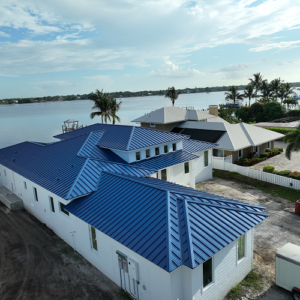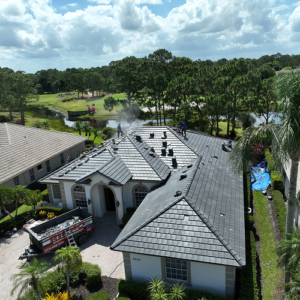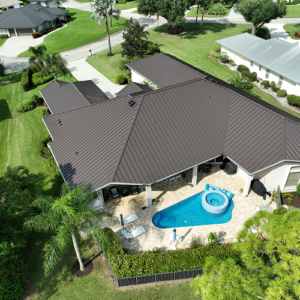
Professional Shingle Roof Replacement & Installation in Fort Pierce, FL

Asphalt shingles are the most common residential roofing material on the Treasure Coast — and when they’re installed correctly, they’re a genuinely capable system. When they’re installed to a lower standard — wrong nailing pattern, inadequate underlayment, improper starter course, no secondary water barrier — they’re the roofing system that fails first when a Florida storm tests them.

Rhino Roofs provides professional shingle roof replacement and installation across Fort Pierce, Port St. Lucie, Stuart, Vero Beach, West Palm Beach, and the surrounding Treasure Coast. We install architectural shingles, impact-resistant shingle systems, and complete component assemblies to current Florida Building Code standards — because a shingle roof that’s built right performs substantially better than one that just passes inspection.

Trusted Shingle Roof Installation Services Across the Treasure Coast
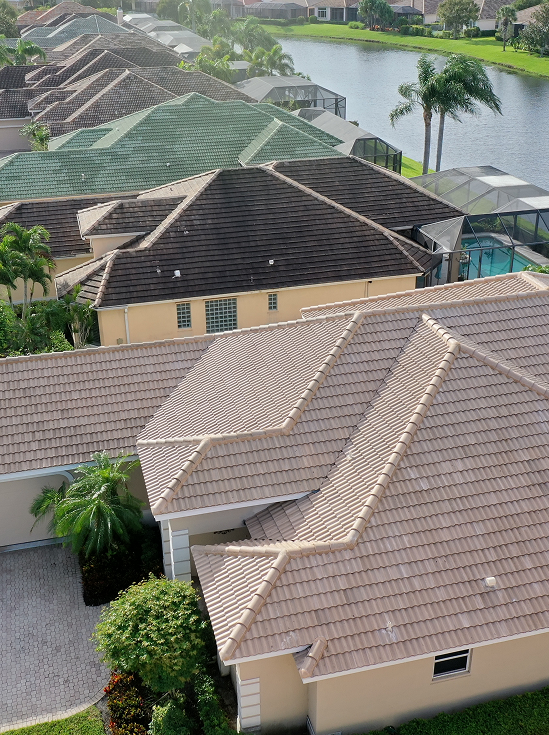
There’s a version of shingle roofing that treats every project as a production metric — maximum square footage per day, minimum installation time, subcontracted crews with rotating quality. That’s not how Rhino Roofs works. Our in-house shingle installation crews handle every project with the same standard: full tear-off to bare decking, proper decking assessment, ring-shank re-nailing, secondary water barrier installation, and manufacturer-specified component installation throughout. We don’t skip the secondary water barrier because it adds time. We don’t use smooth-shank nails because they’re cheaper. We don’t nail high on the shingle to speed up the pattern. These aren’t upgrade options — they’re the installation standard on every job, because that’s what the Florida Building Code requires and what your home deserves. Our shingle roof installation services cover Fort Pierce, Port St. Lucie, Stuart, Vero Beach, West Palm Beach, Jensen Beach, Palm City, and communities throughout the Treasure Coast. Every project is permitted, inspected, and completed with full wind mitigation documentation so you have what your insurance carrier needs at renewal.

Premium Asphalt Shingle Options for Coastal Florida Homes

Not all shingles are equal — and the differences between product tiers matter more in coastal Florida conditions than they do in less demanding climates. Here’s what you’re actually choosing between.

High-Wind Architectural & Dimensional Shingles

Architectural shingles — also called dimensional shingles — are the standard choice for residential roof replacement on the Treasure Coast. Their multi-layered construction provides better resistance to wind uplift, thermal cracking, and granule loss than three-tab shingles. Quality lines typically offer 110–130 MPH wind warranties when properly installed, with Florida Product Approval confirming suitability for local wind zones. Proper nail placement, exposure, starter shingles, and valley installation are critical to achieving rated performance. We install GAF, Owens Corning, and CertainTeed systems to manufacturer specifications, protecting your warranty and wind mitigation eligibility. Best for: Homeowners seeking an affordable, code-compliant system with a reliable 15–20-year service life and potential insurance savings.

Impact-Resistant Shingle Systems for Storm Protection

Impact-resistant shingles use modified polymer compounds to better resist punctures, tearing, hail, and windborne debris. Class 4 shingles—the highest UL 2218 rating—can also qualify for additional insurance discounts with some Florida carriers. For homes with greater hail or debris exposure, the higher upfront cost may be offset by insurance savings and longer durability. We’ll compare standard and impact-resistant options based on your home and insurance coverage. Best for: Homeowners seeking maximum storm protection, longer system life, and potential additional insurance savings.

Algae-Resistant Shingles Engineered for South Florida Humidity

Florida’s year-round humidity makes algae growth a common roofing issue, causing dark streaks and staining on asphalt shingles. Algae-resistant shingles use copper or zinc granules to inhibit growth and maintain the roof’s appearance without chemical treatments or pressure washing. Major manufacturers offer algae-resistant options at a modest premium. We recommend them as a standard choice for Treasure Coast homes where long-term curb appeal matters. Best for: Homeowners seeking a cleaner-looking roof with less maintenance and better long-term appearance.

Shingle Performance & Selection Reference

Wind Rating

Up to 110 MPH

Florida Lifespan

10–12 years

Core Advantage

Lowest upfront cost; appropriate for outbuildings or budget-constrained projects

Wind Rating

Up to 130 MPH

Florida Lifespan

15–20 years

Core Advantage

Multi-layer construction; strong wind uplift resistance; standard insurance credit eligible

Wind Rating

130+ MPH

Florida Lifespan

20+ years

Core Advantage

Maximum storm resistance; UL 2218 Class 4 rated; additional insurance discount eligible

How We Build Shingle Roofs Differently — Fort Pierce Building Code Standards

The Florida Building Code for residential roofing in wind-exposure zones is more demanding than most states, and the specific requirements — nail type, nail pattern, underlayment specification, secondary water barrier application — are what separate an installation that performs in a hurricane from one that doesn’t. Here’s what Rhino Roofs does on every shingle roof replacement, and why each step matters.

We strip all existing material — including any previously installed layered shingles — down to structural plywood or OSB sheathing. This is not optional under Florida Building Code for most replacement scenarios, and it’s not something we’d do differently even if it were. You cannot evaluate decking condition, install a proper secondary water barrier, or establish a clean fastening base over existing material. Tear-off to the deck is how a replacement is done correctly.

Exposed decking is inspected panel by panel before anything else proceeds. Soft spots, delamination, moisture damage, and rot are marked and replaced at current market rate — and you’re informed before that work continues. No surprises.

Florida Building Code requires roof decking to be fastened with ring-shank nails at specific spacing patterns for your home’s wind zone designation. Ring-shank nails resist pull-out forces that smooth-shank nails cannot — a critical distinction in a wind event. On most existing homes, the original nailing pattern was installed to older code standards. We re-nail the full deck before underlayment application.
A peel-and-stick secondary water barrier (SWB) applied over the full deck surface — or at minimum over all deck joints and at eave and rake edges, depending on your wind zone requirements — creates a watertight seal that protects the interior even if shingles are displaced or lost in a wind event. It’s a Florida Building Code requirement in designated wind zones and one of the most heavily weighted factors in Wind Mitigation Form scoring. Every qualifying Rhino installation includes it.
Properly installed starter shingles at eaves and rakes are the first line of defense against wind infiltration under the shingle field edge — they’re not optional and they’re not improvisable with cut field shingles. Six-nail fastening patterns in the specified nail zone provide the wind resistance that unlocks the manufacturer’s rated wind warranty. Sealed valley systems — either closed-cut or open valley with metal liner — eliminate one of the most common concentrated leak locations on a residential roof. These are standard, not upgrades.
Proper attic ventilation — balanced intake at the soffits and exhaust at the ridge — manages the heat and moisture load that accumulates in a Florida attic and directly affects shingle service life. A shingle system installed over an unventilated or inadequately ventilated attic assembly runs hotter, ages faster, and is more prone to thermal cracking than one installed with proper ventilation. We assess ventilation during the pre-installation scope and address deficiencies as part of the installation.

The Step-by-Step Shingle Roof Replacement Process

Step 1

Tear-Off & Decking Inspection. Our crew strips all existing roofing material to bare structural decking, removes all old fasteners from the deck surface, and inspects every panel. Compromised sheathing is identified, priced, and replaced before work continues.

Step 2

Re-Nailing to Hurricane Code. The full deck is re-nailed with ring-shank nails at Florida Building Code spacing for your wind zone. This is the structural baseline for wind resistance performance — and it happens before any waterproofing material is applied.

Step 3

Secondary Water Barrier & Underlayment. Self-adhered SWB is installed at all required locations per your wind zone specification. Synthetic underlayment is then applied over the full deck surface, providing a clean, consistent base for the shingle installation above.

Step 4

Precision Shingle & Component Installation. Starter shingles are installed at all eave and rake perimeters. Architectural shingles are laid in the specified pattern using a six-nail fastening schedule in the correct nail zone. Valley systems, penetration flashings, and step flashing at all wall transitions are completed to manufacturer specification. Ridge vent is installed and ridge cap shingles are set.

Step 5

Final Inspection, Magnetic Sweep & Wind Mitigation Delivery. After the St. Lucie County building inspector signs off, our crew runs a thorough magnetic sweep of the full property. You receive your permit closeout documentation, manufacturer warranty registration, and completed Wind Mitigation Inspection Form for submission to your insurance carrier.

Shingle Roof Service Areas — Fort Pierce & The Treasure Coast

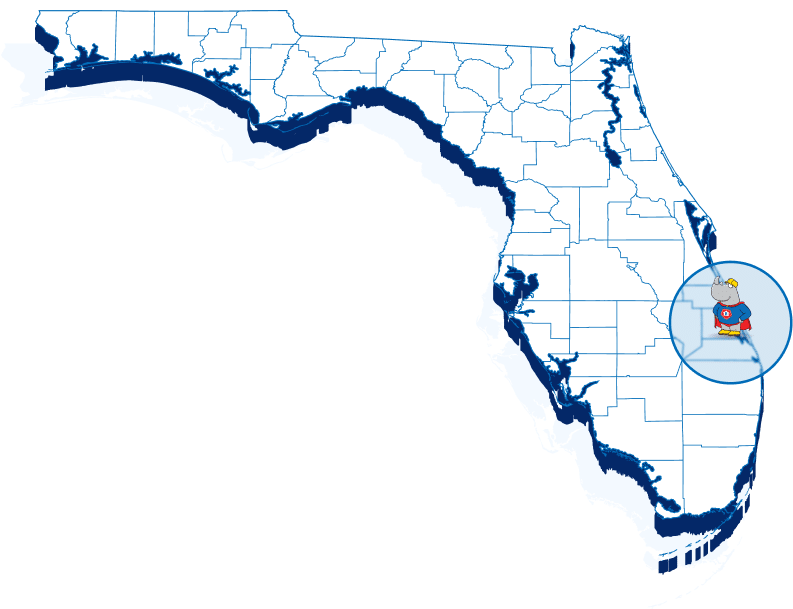
Rhino Roofs provides residential shingle roof replacement and installation services throughout Fort Pierce and the surrounding region, including:

Fort Pierce, FL

Our home base; full shingle roof replacement with code-compliant installation

Port St. Lucie, FL

Architectural and impact-resistant shingle roofing with full permitting

Stuart, FL

Shingle roof replacement and wind mitigation documentation

Vero Beach, FL

Residential shingle roofing with insurance compliance support

West Palm Beach, FL

Shingle roof replacement and installation services

Jensen Beach, FL

Coastal shingle roofing with algae-resistant and impact-resistant options

Palm City, FL

Residential shingle roof replacement across all product tiers

Hobe Sound, FL

Shingle roof installation and storm damage repair

Sebastian, FL

Full residential shingle roofing services

Hutchinson Island, FL

Wind-rated shingle roofing for coastal residential properties
A shingle roof built right handles whatever Florida sends at it.

If you’re replacing a system that’s reached the end of its service life, responding to an insurance carrier requirement, or upgrading to an impact-resistant product for better storm performance — Rhino Roofs is ready to give you a clear, written estimate and install a roof that earns its keep.

Free inspection. No pressure. No manufactured urgency. Just honest work done correctly.

Frequently Asked Questions About Residential Shingle Roofing

How much does a residential shingle roof replacement cost in Fort Pierce?

Shingle roof replacement costs on the Treasure Coast depend on your home’s square footage, the pitch and complexity of the roof structure, the shingle product tier selected, and whether any structural decking replacement is required once tear-off is complete. Architectural shingles are the most accessible entry point; impact-resistant premium products carry a higher material cost but may offset through insurance savings depending on your carrier. Because every home is different, we provide free on-site estimates with full itemized breakdowns — so you know exactly what your project costs before committing to anything.

Many Florida homeowners insurance carriers have implemented strict age-based roof guidelines that tie policy renewal eligibility directly to roof age — not to whether the roof is actively leaking or visibly damaged. For asphalt shingle systems, 15 years is the common threshold beyond which many carriers decline to renew or require replacement as a condition of continued coverage. This is driven by Florida’s storm loss history and the accelerated aging that UV exposure, humidity, and heat impose on shingle systems in South Florida compared to national averages. A new, permitted installation from a licensed Florida roofing contractor resets that eligibility clock entirely and, in most cases, qualifies for a Wind Mitigation Form credit that meaningfully reduces your premium.

Architectural shingles are a substantially better choice for Florida homes in almost every performance category. Their multi-layered laminated construction is heavier, stiffer, and more resistant to wind uplift than single-ply three-tab shingles — with wind ratings of up to 130 MPH versus the 110 MPH ceiling on most three-tab products, when installed with the correct fastening pattern. They also have longer service lives (15 to 20 years versus 10 to 12 for three-tab in coastal Florida conditions), better resistance to thermal cracking, and richer visual depth that holds up better over time. For most Treasure Coast homeowners, three-tab shingles are cost-appropriate only for outbuildings and secondary structures — not for a primary residence where insurance eligibility and wind performance matter.

A secondary water barrier (SWB) is a self-adhered, peel-and-stick membrane applied directly to the roof decking beneath the primary shingle system. It creates a watertight seal at the deck level that protects your home’s interior even if shingles are displaced during a severe wind event — because the shingles alone are not a watertight system, and in a hurricane-force scenario, some shingle loss is a realistic possibility regardless of installation quality. Florida Building Code requires SWB installation on new roofs in designated wind speed zones, and its presence is one of the most heavily weighted factors in Wind Mitigation Form scoring. We install it on every qualifying shingle roof replacement we complete.
A repair is appropriate when damage is isolated — a few missing shingles, a failed flashing, a localized leak — and the surrounding system is structurally sound with serviceable life remaining. Replacement becomes the right answer when the system is approaching or past its reliable service life (15 to 20 years for architectural shingles in coastal Florida conditions), when your insurance carrier is requiring it based on age, when granule loss is widespread across the field, or when the Florida 25% Rule applies — meaning storm or cumulative damage has exceeded 25% of a roof section, triggering a code-compliant reroofing requirement for that section. Our estimators assess both scenarios honestly and tell you which situation you’re actually in.

TESTIMONIALS

John Doe
John Doe@username
Lorem ipsum dolor sit amet, consectetur adipiscing elit. Ut elit tellus, luctus nec ullamcorper mattis, pulvinar dapibus leo.
John Doe
John Doe@username
Lorem ipsum dolor sit amet, consectetur adipiscing elit. Ut elit tellus, luctus nec ullamcorper mattis, pulvinar dapibus leo.
John Doe
John Doe@username
Lorem ipsum dolor sit amet, consectetur adipiscing elit. Ut elit tellus, luctus nec ullamcorper mattis, pulvinar dapibus leo.