Premium Metal Roof Replacement & Installation in Fort Pierce, FL
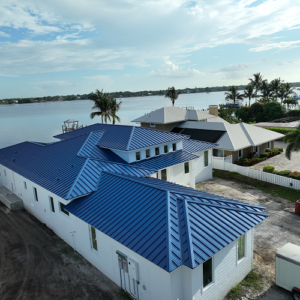
Metal roofing has become a popular upgrade for homeowners across the Treasure Coast, offering durability, hurricane resistance, energy efficiency, and long-term value. A properly engineered standing seam metal roof can outperform asphalt shingles while improving the structural and financial profile of your home.
Rhino Roofs provides residential metal roof replacement and installation in Fort Pierce, Port St. Lucie, Stuart, Vero Beach, West Palm Beach, and the surrounding Treasure Coast. Our metal roofing teams are trained for precision installation, with every project permitted, code-compliant, and supported by complete wind mitigation documentation.
Elite Residential Metal Roof Installation Services Across the Treasure Coast
Metal roofing is not a generic product category. The profile, the gauge, the substrate, the coating system, the fastening method, the underlayment specification, and the flashing execution at every penetration, transition, and perimeter edge all interact to determine whether a metal roof performs for 50 years or develops problems in five. Getting those decisions right requires a different depth of knowledge than standard shingle installation — and it’s why Rhino Roofs trains and develops dedicated metal roofing crews rather than rotating general installers between material types.
Our residential metal roof installation services cover the full scope: comprehensive pre-installation assessment of your existing roof structure, complete tear-off to bare decking, structural decking evaluation and replacement where required, ring-shank re-nailing to current Florida Building Code standards, high-temperature secondary water barrier installation, custom valley and flashing fabrication, precision panel installation to manufacturer specification, and complete permit and wind mitigation documentation on closeout.
We work with homeowners throughout Fort Pierce, Port St. Lucie, Stuart, Vero Beach, Jensen Beach, Palm City, West Palm Beach, and surrounding Treasure Coast communities — providing the same installation standard on every project, regardless of size or location.
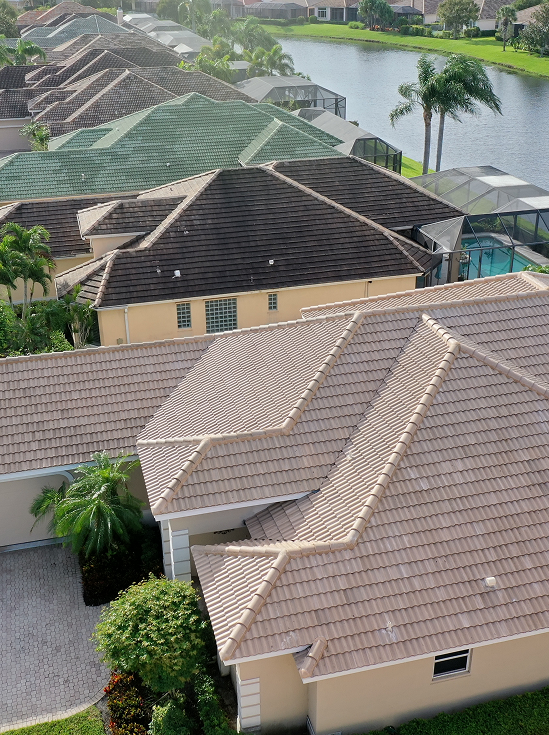
Choosing the Right Profile for Your Residential Metal Roof Replacement
One of the most important decisions in a metal roof replacement is the panel profile — and it’s a decision that affects performance, longevity, aesthetics, and budget in ways that are worth understanding clearly before you approve any scope.
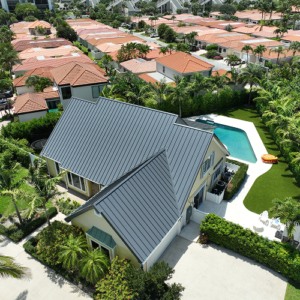
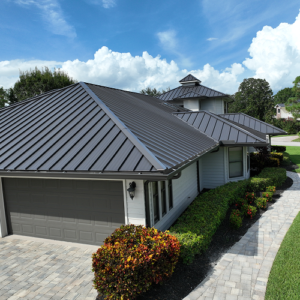
Hidden Fastener Standing Seam Systems — The Gold Standard
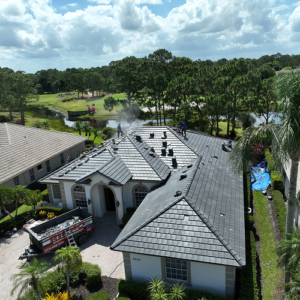
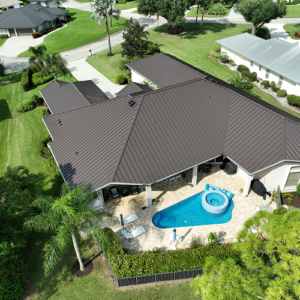
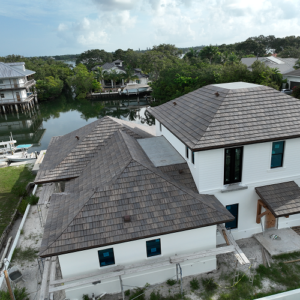
Traditional 5V Crimp & Exposed Fastener Panels
Coastal-Grade Aluminum Roofing for Waterfront Homes
Metal Roofing Panel Profile Comparison
Fastener Type
Concealed clips — no exposed screws
Best Suited For
Modern homes; maximum wind zone performance
Primary Advantage
Zero fastener leak points; accommodates full thermal expansion/contraction
Fastener Type
Exposed screws with rubber washers
Best Suited For
Classic coastal and farmhouse architecture; tighter budgets
Primary Advantage
Lower upfront cost with strong metal durability; field-proven Florida profile
Best Suited For
Waterfront, Intracoastal, and oceanfront properties
Primary Advantage
Complete immunity to saltwater atmospheric corrosion
Why Treasure Coast Homeowners Are Upgrading to Metal Roofing
The Insurance Equation
Florida’s homeowners insurance market has tightened significantly, and roof age and wind rating are among the primary factors carriers are evaluating. A standing seam metal roof — documented with a Wind Mitigation Form confirming its 140+ MPH rating, secondary water barrier installation, and enhanced fastening — qualifies for the maximum available wind coverage discounts with most Florida carriers. For many Treasure Coast homeowners, the annual premium reduction on a standing seam metal roof closes a meaningful portion of the cost gap versus shingles over a 10-to-15-year horizon.
The Longevity Math
The Energy Performance
Precision Engineering — Our Metal Roof Installation Process
Step 1
Step 2
Step 3
Step 4
Step 5
Metal Roofing Service Areas — Fort Pierce & The Treasure Coast
Fort Pierce, FL
Our home base; standing seam, 5V crimp, and aluminum installation
Port St. Lucie, FL
Full residential metal roofing services with permit and wind mitigation documentation
Stuart, FL
Metal roof replacement and new installation for all residential profiles
Vero Beach, FL
Standing seam and coastal aluminum roofing for residential properties
West Palm Beach, FL
Residential metal roof replacement and installation services
Jensen Beach, FL
Coastal metal roofing with aluminum options for waterfront properties
Palm City, FL
Standing seam and exposed-fastener metal roof replacement
Hobe Sound, FL
Metal roof installation and storm-rated residential roofing
Sebastian, FL
Full residential metal roofing services across all profiles
Hutchinson Island, FL
Oceanfront and Intracoastal aluminum and standing seam roofing
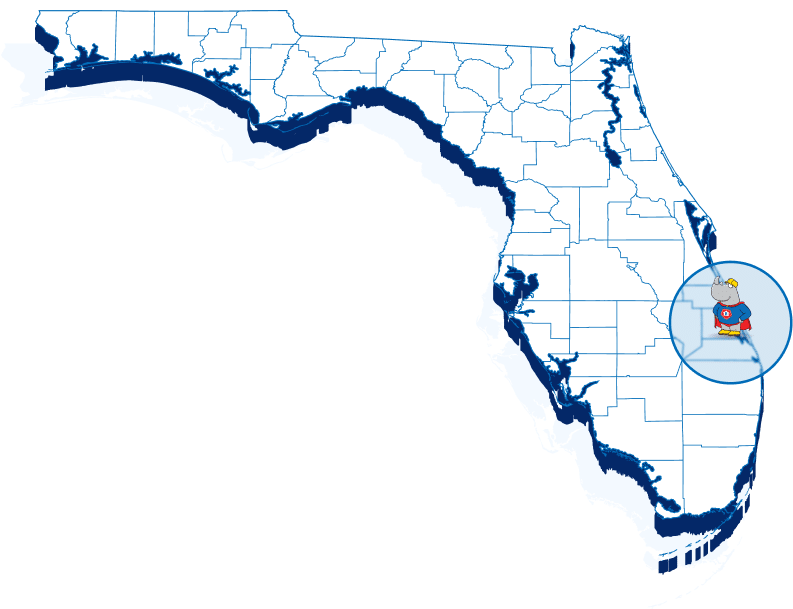
For waterfront properties anywhere on the Treasure Coast or Palm Beach County coast, call us to discuss coastal-grade aluminum specifications for your specific location and exposure.
A metal roof is one of the smartest structural investments you can make for a home on the Treasure Coast.
Frequently Asked Questions About Residential Metal Roofing
Is a metal roof replacement worth the extra cost in Fort Pierce?
What is the difference between standing seam and exposed-fastener metal roof installation?
Standing seam metal roof installation uses hidden structural clips that fasten the panels to the decking without any surface penetrations — the panels interlock at raised seams with no screws punching through the metal face. Exposed-fastener systems, like 5V crimp and corrugated panels, are anchored with screws that penetrate the panel surface and are sealed with rubber washers. Standing seam eliminates the fastener-point leak risk entirely and accommodates thermal expansion more effectively; exposed-fastener systems offer a lower upfront cost and a profile that suits classic Florida coastal architecture, but require periodic washer inspection and maintenance as the roof ages.
Will a metal roof attract lightning or be noisier during Florida rainstorms?
A metal roof does not meaningfully increase lightning strike risk — metal is a conductor that disperses electrical energy, but it does not attract strikes more than any other roofing material. If a strike does occur, a metal roof’s conductivity means energy dissipates more safely than it would through a combustible material. As for noise, a properly installed metal roof over solid structural decking and a high-density underlayment is acoustically comparable to a shingle roof — the “noisy in rain” reputation applies to metal over open framing without solid decking, which is not how residential metal roofing is installed in Florida. You will not notice a difference in rain noise versus your previous shingle roof.
What gauge metal is best for a residential roof in coastal Florida?
For standing seam steel systems, 24-gauge is our standard specification for residential coastal Florida applications. It provides meaningfully better dent resistance, panel rigidity, and long-term structural integrity than the 26-gauge panels that some contractors use to reduce material cost. For exposed-fastener profiles, 26-gauge is a reasonable standard given the structural support those systems receive from more frequent fastening points. For aluminum systems, gauge equivalency works differently than steel due to aluminum’s lower density — we select aluminum thickness based on the specific panel profile and wind zone requirements of your home’s location.
How long does a residential metal roof installation take?
Most residential metal roof replacements take three to five days of active installation, depending on the size of the home, the profile selected, and whether any structural decking work is required. Standing seam systems take slightly longer than exposed-fastener profiles due to the clip-setting process and the precision required at custom flashing transitions. The full project timeline from approved estimate to final inspection sign-off typically spans two to four weeks, with the majority of that window in permitting and material lead time rather than active work on your property.
TESTIMONIALS