Commercial Metal Roof Replacement & Installation | Fort Pierce & The Treasure Coast
Commercial metal roofing is a generational capital decision. A properly engineered standing seam system on a Treasure Coast commercial building carries wind ratings well above ASCE 7-22 thresholds, delivers a 40-to-50-year service life, and — when correctly specified for coastal exposure — requires minimal intervention over that horizon.
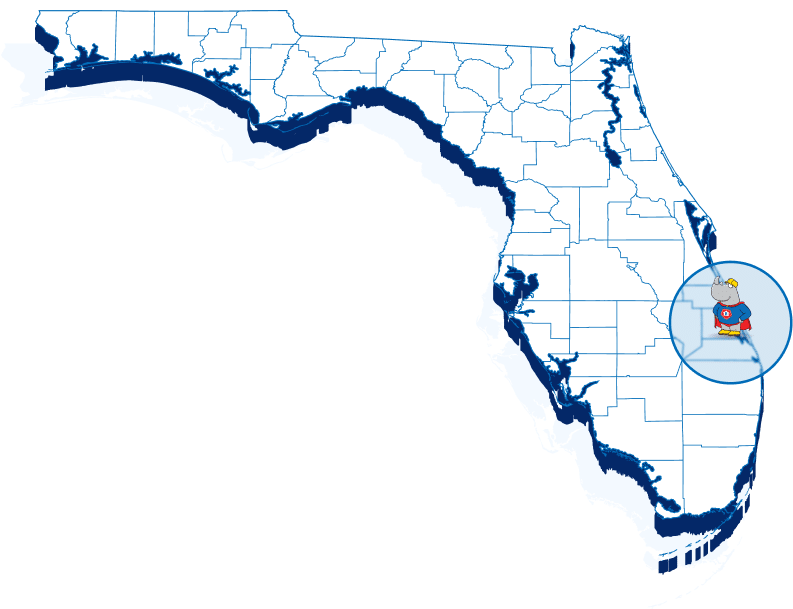
Rhino Roofs provides commercial metal roof replacement and installation across Fort Pierce, Port St. Lucie, Stuart, Vero Beach, West Palm Beach, and the surrounding Treasure Coast. We work with building owners, asset managers, facilities directors, and general contractors on new construction, full structural replacements, and metal-over-metal retrofit installations.
Engineered Commercial Metal Roof Installation for Coastal Infrastructure
Mechanical-Lock Standing Seam Systems
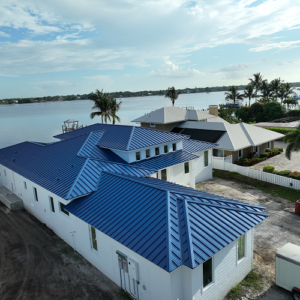
Mechanical-lock standing seam is the highest-performing commercial metal roofing profile available. Panels are physically crimped together on-site using robotic seamers — 180 or 360-degree mechanical locks that create a structural seam no weather event can separate. There are no surface fastener penetrations in the panel field, and the concealed clip system allows panels to float independently over thermal expansion without stressing the attachment points.
For commercial buildings in Fort Pierce and coastal St. Lucie County, mechanical-lock systems are the specification for maximum ASCE 7-22 negative wind-uplift resistance. We install 24-gauge Galvalume steel panels with Kynar 500 PVDF resin coatings as the standard commercial specification — the gauge and finish that justifies the investment over a multi-decade horizon.
Snap-Lock & Architectural Metal Panels for Light Commercial
Snap-lock panels engage via built-in male/female clip profiles without on-site mechanical crimping. They’re appropriate for light commercial, multi-family, and architectural applications where the full structural performance of a mechanical-lock system isn’t required and a lower installed cost is the priority.
We’re direct about where snap-lock is the right answer and where it isn’t. For high-wind coastal commercial buildings, mechanical-lock is the correct specification. For covered walkways, lower-slope ancillary structures, or architecturally driven installations in less demanding exposure categories, snap-lock is a legitimate and cost-appropriate choice.
Metal-Over-Metal Retrofit Systems
A full structural tear-off isn’t always required for a commercial metal roof replacement. When the existing metal structure is sound, a metal-over-metal retrofit — installing lightweight sub-framing or “hugger” purlins over the existing panels, then anchoring a new standing seam system on top — avoids the disposal cost, structural disruption, and business interruption of a complete removal.
The prerequisite is an honest structural assessment: existing purlins evaluated for rust oxidation and load capacity, and the building frame confirmed to support the new system’s dead load plus the retained weight of the original panels. We conduct that assessment before recommending retrofit as an option — it isn’t appropriate for every building.
Designing for High-Wind Coastal Zones — ASCE 7-22 & Florida Building Code
Salt-Air Defense — Galvalume vs. Marine-Grade Aluminum
Floating Thermal Clip Engineering
Our Commercial Metal Roof Replacement Process
Step 1
Step 2
Step 3
Step 4
Step 5
Step 6
Why the Right Commercial Metal Roof Installer Matters
Metal roofing punishes installation errors in ways that don’t always surface immediately. A clip improperly seated, a seam under-crimped, a flashing detail approximated rather than fabricated — none of these failures announce themselves at installation. They show up in year three or five as seam failures, flashing leaks, and fastener pullback that voids the warranty and requires remediation at full cost.
Our commercial metal roof installers are trained specifically for the precision mechanical-lock installation requires — robotic seamer operation, clip spacing verification, custom flashing fabrication, and the purlin assessment work that determines whether a retrofit is structurally appropriate. We carry the manufacturer certifications that make NDL warranties available and the OSHA compliance that commercial property access requires.
Metal Substrate Reference
Coating
Kynar 500 / PVDF
Best Suited For
Inland and low-coastal commercial; industrial and warehouse facilities
Coating
Marine-grade anti-corrosive finish
Best Suited For
Oceanfront, Intracoastal, and high salt-air exposure properties
Commercial Metal Roofing Service Areas — Fort Pierce & The Treasure Coast
Fort Pierce, FL
Our home base; mechanical-lock, snap-lock, and retrofit installations
Port St. Lucie, FL
Commercial metal roofing for industrial, retail, and office properties
Stuart, FL
Standing seam installation with ASCE 7-22 wind engineering
Vero Beach, FL
Commercial metal roofing for all property categories
West Palm Beach, FL
Commercial metal roof replacement for Palm Beach County properties
Jensen Beach, FL
Coastal aluminum specification for Intracoastal and near-ocean properties
Palm City, FL
Commercial standing seam and retrofit installations
Hobe Sound, FL
Commercial metal roofing with coastal exposure specifications
Sebastian, FL
Full commercial metal roof replacement services
Hutchinson Island, FL
Oceanfront and Intracoastal commercial metal roofing
Commercial metal roofing done right is a decision you make once for the life of the asset.
Frequently Asked Questions
What is the difference between a mechanical-lock and snap-lock commercial metal roof?
Mechanical-lock panels are physically crimped together on-site by robotic seamers, creating a structural seam with superior negative wind-uplift resistance. Snap-lock panels engage via built-in clips without on-site crimping — appropriate for lighter commercial applications, but not the specification for high-wind coastal exposure in Fort Pierce and St. Lucie County.
Can you install a new commercial metal roof over an existing metal roof?
Why is Kynar 500 coating recommended for commercial metal roofs on the Treasure Coast?
How long does a commercial metal roof last in coastal Florida?
TESTIMONIALS